| ANSWER TO THE FOLLOWING QUESTIONS |
| 1. What is the largest moon in our solar system? |
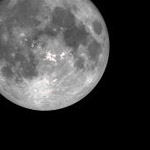 |
| Charon |
| Titania |
| Ganymede |
| Tian |
| Our Moon |
|
| 2. What is the place between stars called? |
 |
| Interstellar space |
| Intergalactic space |
| Interplanetary space |
| Outer space |
| Space |
|
| 3. A natural satellite that orbits a planet? |
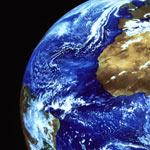 |
| A Star |
| A Moon |
| A Sun |
|
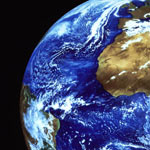
| 4. Which planet has surface and atmosphere most like the Earth? |
 |
| Neptune |
| Mercury |
| Mars |
| Venus |
|
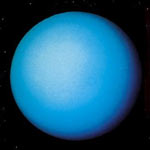
| 5. How long is the year on Uranus? |
 |
| 84 years and 7 days. |
| 85 years and 2 days. |
| 83 years and 16 days. |
|
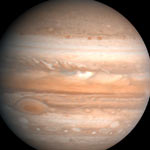
| 6. How long is a day on Jupiter? |
 |
| 12 hours and 50 minutes. |
| 16 hours and 50 minutes. |
| 9 hours and 50 minutes. |
|
| 7. How far is Jupiter from the Sun? |
 |
| Jupiter's mean distance from the Sun is 778,000,000 kilometers. |
| Jupiter's mean distance from the Sun is 734,000,000 kilometers |
| Jupiter's mean distance from the Sun is 759,000,000 kilometers. |
|
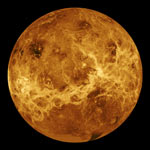
| 8. How big is the Venus? |
 |
| The diameter of Venus 12,600 kilometers. |
| The diameter of Venus 13,100 kilometers. |
| The diameter of Venus 12,100 kilometers. |
|
| 9. How hot is the sun? |
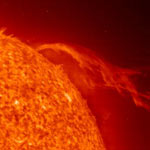 |
| The temperature of the surface of the Sun is about 6,000 °C. |
| The temperature of the surface of the Sun is about 12,000 °C. |
| The temperature of the surface of the Sun is about 1,000 °C. |
|
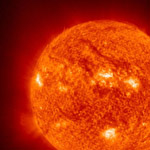
| 10. Which planet is closest to the sun? |
 |
| Mars |
| Mercury |
| Earth |
| Neptune |
|
|